



Desde Biotechvana nos es grato ofrecer a nuestros usuarios servicios avanzados de bioinformática estructural, orientados al estudio de proteínas y complejos biomoleculares mediante herramientas de modelado, simulación y diseño computacional. Nuestros análisis permiten explorar la estructura, función y dinámica de proteínas, así como optimizar sus propiedades mediante ingeniería racional y enfoques de inteligencia artificial.
En el ámbito de la bioinformática estructural, ofrecemos distintas modalidades de análisis adaptadas a los objetivos de cada proyecto, entre ellas:
- Ingeniería y diseño de proteínas: optimización o creación de novo de proteínas mediante rediseño estructural, predicción asistida por inteligencia artificial y análisis de mutaciones funcionales.
- Modelado molecular y simulación: predicción de estructuras tridimensionales, refinamiento estructural, análisis de estabilidad y dinámica molecular mediante herramientas de simulación avanzadas.
- Estudios de interacción biomolecular: análisis de complejos proteína–ligando o proteína–proteína, predicción de sitios de unión, simulación de complejos y estimación de energías libres de interacción.
Cada proyecto se aborda de forma personalizada, adaptando los métodos y herramientas al tipo de proteína, ligando o sistema molecular de interés.
Este análisis permite diseñar o rediseñar proteínas con propiedades específicas, evaluando variantes y guiando decisiones basadas en estructura y función.
- Obtención de secuencias proteicas desde bases de datos (UniProt, PDB, AlphaFold DB, etc.).
- Curado de estructuras: eliminación de ligandos, protonación, corrección de residuos faltantes, etc.
- Modelado estructural (AlphaFold, OmegaFold, Swiss-Model…).
- Análisis del modelo e identificación de regiones funcionales.
- Diseño de novo o rediseño de proteínas existentes (RFdiffusion, ProteinMPNN, LigandMPNN).
- Simulación de dinámica molecular para evaluar la estabilidad estructural (AMBER, GROMACS...).
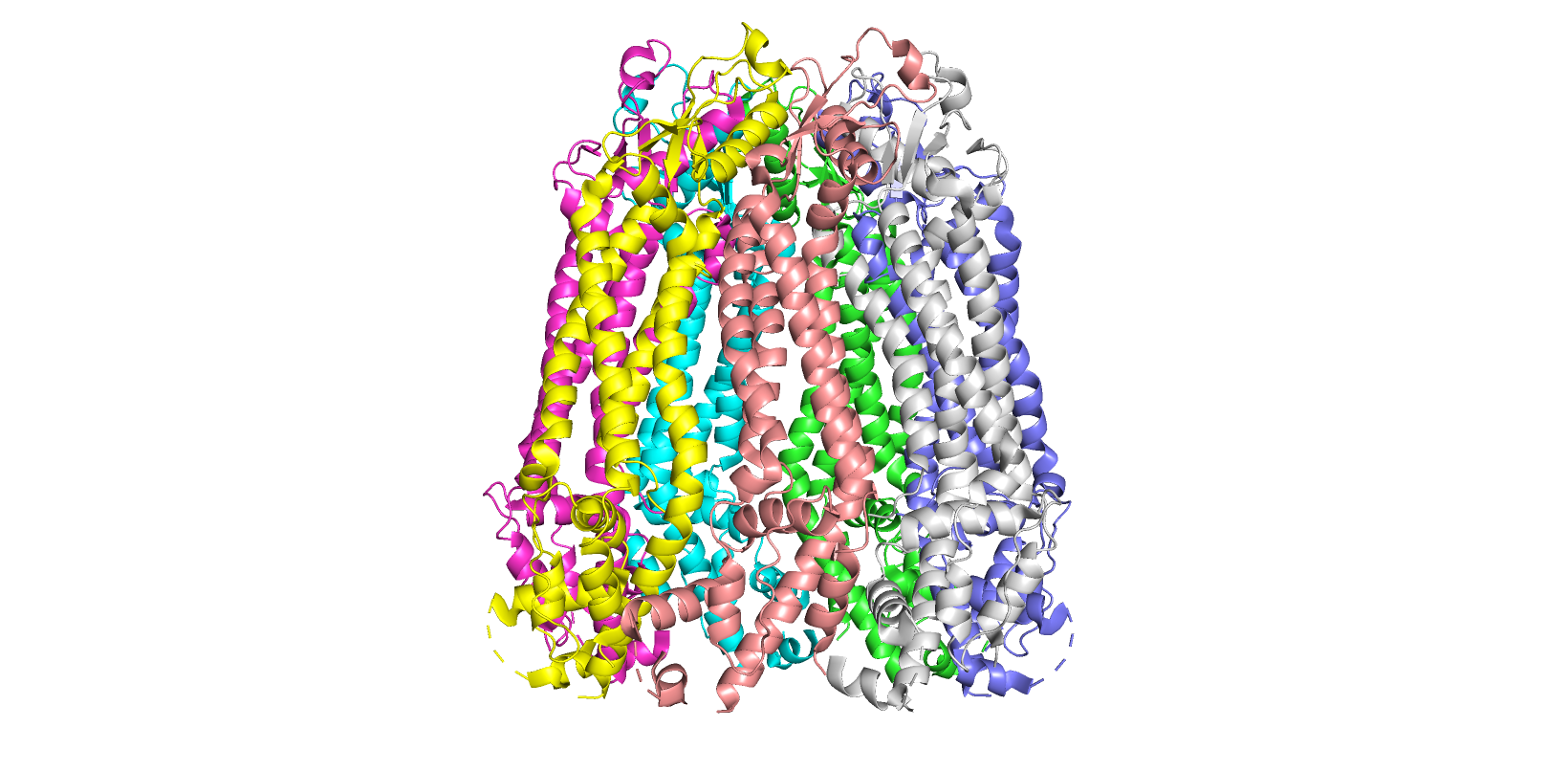
Este análisis permite generar y optimizar modelos estructurales fiables, evaluar su estabilidad y extraer propiedades funcionales relevantes para estudios mecanísticos y aplicaciones biomédicas.
- Preparación de modelos moleculares limpios y listos para simulación mediante la corrección de errores, la asignación de estados de protonación y la optimización de la geometría.
- Adición de átomos y residuos faltantes, corrección de discontinuidades de cadena y selección de estados de protonación adecuados para grupos ionizables al pH objetivo.
- Aplicación de un campo de fuerza apropiado y minimización de energía para eliminar choques estéricos y relajar enlaces tensionados; generando una estructura inicial de baja energía adecuada para refinamiento o simulaciones posteriores.
- Mejora de la geometría local y global utilizando métodos de refinamiento dirigidos para lograr una mejor concordancia con datos experimentales o expectativas teóricas.
- Refinamiento con posibilidad de inclusión de modelado de bucles, optimización de rotámeros de cadenas laterales y minimización restringida o simulaciones cortas de dinámica molecular para corregir regiones deficientemente modeladas.
- Evaluación del comportamiento de la estructura a lo largo del tiempo y de las regiones que presentan rigidez o movilidad.
- Utilización de simulaciones de dinámica molecular (MD) o análisis de modos normales para muestrear el espacio conformacional y calcular métricas como RMSD, RMSF y persistencia de estructura secundaria.
- Identificación de bucles flexibles, regiones bisagra y núcleos estables.
- Evaluación de la estabilidad térmica, rutas de desnaturalización o el efecto de mutaciones sobre la dinámica para predecir consecuencias funcionales.
- Caracterización de propiedades que relacionan la estructura con la función biológica y posibles aplicaciones.
- Análisis de cavidades de unión, superficies electrostáticas, redes de enlaces de hidrógeno y regiones hidrofóbicas para inferir ligandabilidad y puntos calientes de interacción.
- Cálculo de propiedades como accesibilidad al solvente, desplazamientos de pKa y energías de unión predichas para apoyar diseño de fármacos, estudios mutacionales o la interpretación de resultados experimentales.
Este análisis permite comprender cómo las biomoléculas interactúan y con qué afinidad, aportando evidencias para interpretar mecanismos biológicos, priorizar dianas y orientar diseño y validación experimental.
- Identificación y caracterización de cómo pequeñas moléculas u otras proteínas se unen a una proteína diana.
- Utilización de herramientas de docking (AutoDock Vina, HADDOCK, etc.) para predecir poses de unión y priorizar interacciones probables.
- Inspección de contactos clave como enlaces de hidrógeno e interacciones hidrofóbicas.
- Mapeo de puntos calientes de interacción.
- Orientación de los resultados a la generación de hipótesis para mutagénesis, diseño de inhibidores o validación experimental.
- Simulación del comportamiento dependiente del tiempo de complejos proteína–ligando o proteína–proteína para muestrear conformaciones realistas e interacciones dinámicas.
- Ejecución de simulaciones de dinámica molecular para observar cambios conformacionales, efectos del solvente y contactos transitorios.
- Análisis de trayectorias para cálculo de métricas como RMSD, RMSF y tiempos de vida de interacciones.
- Estas simulaciones permiten revelar mecanismos no evidentes a partir de modelos estáticos.
- Cuantificación de la fuerza de unión mediante métodos como MM/PBSA o MM/GBSA para estimar energías libres de unión relativas o absolutas.
- Cálculo de contribuciones energéticas (electrostáticas, van der Waals, solvatación) a partir de instantáneas de dinámica molecular para priorizar ligandos o mutaciones y racionalizar afinidades observadas.
- Evaluación de la estabilidad del complejo y la afinidad de interacción.
- Combinación de análisis estructurales, métricas derivadas de dinámica molecular y estimaciones de energía libre para determinar la vida media del complejo, la propensión a la disociación y el efecto de mutaciones o cambios ambientales sobre la afinidad.
- Estas evaluaciones respaldan decisiones de diseño y estrategias experimentales.